FOAM MASSAGE
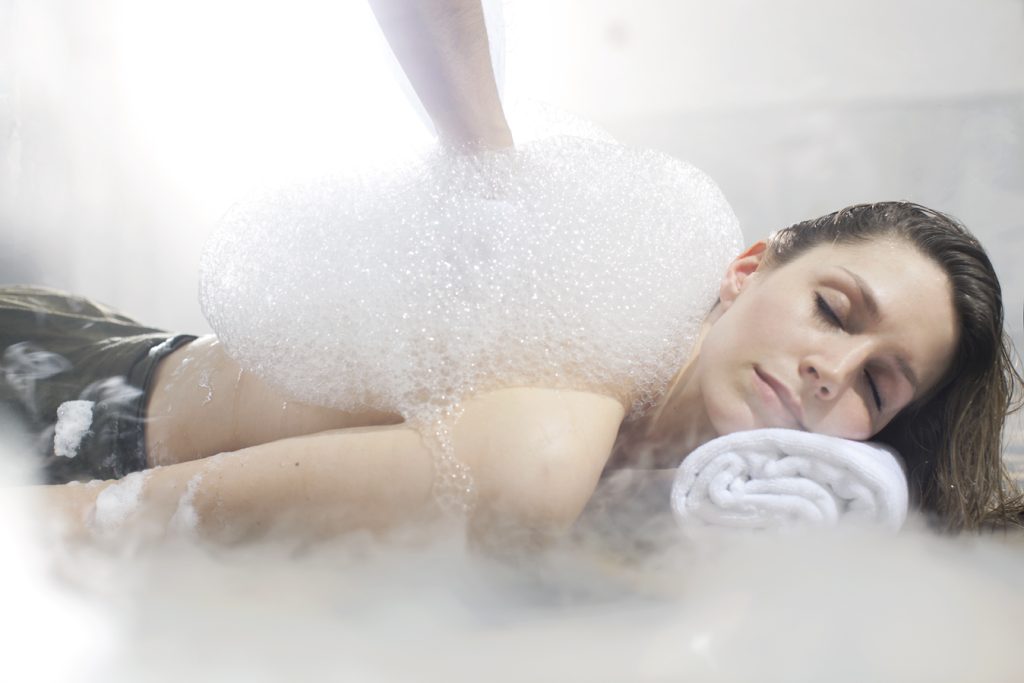
A Turkish bath foam massage is a classic hammam ritual that combines warm water, soft foam, and gentle massage techniques to create a relaxing and refreshing experience. Performed on a heated marble platform inside the hammam, this treatment is designed to cleanse the skin, soothe the body, and offer a moment of pure comfort.
What to Expect During the Foam Massage
Warm Hammam Preparation
Your experience begins in the warm environment of the hammam, allowing your body to relax and your pores to open.
Rich Foam Creation
A therapist uses a traditional linen pouch to create light, airy foam made from natural soap. The foam is warm, silky, and pleasantly fragrant.
Foam Application
Your body is gently covered with the soft foam, offering a soothing, cloud-like sensation.
Relaxing Massage
The therapist performs a gentle, rhythmic massage using the foam to help release tension, encourage relaxation, and enhance your hammam experience.
Warm Water Rinse
After the massage, warm water is used to rinse away the foam, leaving your skin feeling fresh and clean.
Moisturizing Finish
The ritual often ends with a light moisturizing lotion or oil to keep your skin soft and hydrated.
Wellness Benefits
-
A deeply refreshing cleansing ritual
-
A relaxing experience enhanced by warmth and foam
-
A gentle exfoliating effect through massage movements
-
Supports a smoother and softer skin feel
-
Helps you unwind and enjoy the calming atmosphere of the hammam
Tips for the Best Experience
-
Let your therapist know if you prefer lighter or firmer massage pressure
-
Drink water before and after your hammam session
-
Allow yourself to relax fully and enjoy the warmth of the space
-
Moisturize your skin after the treatment for long-lasting softness
Conclusion
A Turkish bath foam massage offers a unique combination of cleansing, relaxation, and traditional hammam culture. Warm foam, gentle movements, and the serene atmosphere of the bath come together to provide a soothing escape from daily stress.